Posts Tagged ‘altitude’

Blog Writing – An Interview

Thursday, October 20th, 2011

I was recently asked to contribute to an article published by the Writers Guild of Alberta about my adventure writing. I was asked a couple of questions about my blog writing and thought I would share the answers here:

Q: What did you learn about blog writing while you blogged about your Everest attempt?

A: One thing I got really positive feedback on was the brutal honesty with which I wrote my blog entries. I really stressed the hardships that are involved with high-altitude climbing, to give people a view of what life is really like on an expedition, maybe dispel some myths or romantic thoughts that people have. And I tried to do it in such a way that readers can relate, which is not always easy, but I think I managed to accomplish that for the most part.

Something else worth mentioning is that I wrote my blog entries as soon as the events happened. It allowed me to share all the emotions and feelings that I felt, because sometimes if I let a few days pass, those feelings calmed down a little. That helped me in passing along things the way I experienced them and the way I reacted to them. However, one thing I have learned is that you can never really pass along what it’s like to be in certain situations, not by writing or talking or anything, that only people who have been through the same can relate. But that’s just life!

Q: What is one of your favourite magazine articles, books, or films about outdoor adventure?

A: I would have to say Joe Simpson’s book, Touching the Void. A great writer puts into words what it’s like to give all you have to survive.

The article was published in the magazine WestWord for July/Aug 2011. If you have any feedback on my writing just comment below!

Everest 2011: Summits and Deaths

Monday, May 9th, 2011

Just a quick update on the things happening on Everest this year. May 6 saw the first Sherpa team reach the summit from the south (Nepal) side, fixing ropes to the summit as they went. This now opens the doors for any and all teams to follow and try reaching the summit when the next weather windows come.

Also, there have been two deaths already reported on Everest this year, both on the south side. One of them was an American, and you can see a story on him here. When I read a story like that it definitely brings things into perspective again of what can happen out there, and my thoughts and prayers go out to the family.

Anyways, now is a time to be staying on top of Everest action, as more and more teams plan for the summit, and more news should be hitting the streets as people do and don’t make it. For some of the latest news keep an eye on http://everestnews.com/, they usually have the latest.

Hope everyone is enjoying their May so far! For those coming to my presentation at the CPL this Saturday, see you there! That will be three days away from my one-year Everest summit anniversary.

Take care!

How to Train for Mount Everest

Sunday, March 6th, 2011

As the next batch of adventurers get ready for their own attempts at Mt. Everest, I find myself asking them how they train for “the big E” (as some people call it). When I was preparing and training I did all the research I could, asked all the people that might know, so that I would be as prepared as possible. Looking back on it almost one year later I thought I would list the things that I thought helped me the most, and in general they can be applied to other circumstances also. In order if decreasing importance they are:

1. Listen to people that have done it before.

The fact is Everest has been climbed by thousands of people. Chances are if you are at all entertaining the idea of climbing Everest you’ve met someone who has done it. Hopefully you’ve climbed with them. Ask them all they know and take it seriously. I attribute a lot of my success to picking the brains of Ryan Waters at Mountain Professionals, who I climbed Aconcagua with, and Arnold Coster, who I climbed Cho Oyu with.

Squats

2. Climb an 8000m mountain before attempting Everest

One of the things I learned from point (1) above is this point. The company I climbed Aconcagua with stated that climbing Aconcagua was enough to qualify for Everest. However I was convinced by others it would be better to climb Cho Oyu first, and I’m glad I did. Aconcagua to Cho Oyu was a step up, a predictable one to be honest. And Cho Oyu to Everest was of course a step up also, but more that I thought it would be.

I have since developed my own reason for recommending that people climb Cho Oyu first. The straight fact is that nobody knows how their body will react to elevations of 8000m. And to put it bluntly, it’s much easier for others to drag your unconscious or otherwise disabled body from or near the summit of Cho Oyu than from most points on Everest. So as you learn how your body reacts to 8000m, do it in a place that has more room for ‘self discovery’ than Everest.

Another, less important reason, is to prepare one’s mind to long expeditions. Going from a three-week expedition like Aconcagua or Denali to an eight-week Everest expedition is a big jump. Most people that don’t summit Everest are not turned back by bad weather or from being too tired or not having enough technical experience. They choose to go home early because they don’t know how miserable an Everest expedition is, how taxing on the mind and body, how much they’ll miss their families (keep all family contact to a minimum when on the expedition to help with this point).

I have met a bunch of people, from marathon runners in tremendous shape to true Alpiniste mountaineers who make first ascents in the Alps and Andes, decide to go home early. And there’s nothing wrong with that, I also wanted to go home early at various points. But there is a way to be prepared for it.

Climbing Stairs with Pack

3. Train Mentally

I could write a lot about this but I think it has been said better by Ice and Mixed Climber extraordinaire, fellow Canadian Will Gadd on his own blog Gravsports. An excerpt is below:

Nobody wants to think about mental fitness. It’s a lot easier to keep track of physical improvement than mental improvement. To become stronger mentally you have to look inside yourself and realize that, even if you can do a one-arm pullup with an engine block in the other hand, the ultimate limiting factor is your head. And most people are simply too weak mentally to actually get stronger mentally. For many people the area between their ears is completely dark, off-limits and filled with soul-twisting demons that just can’t be faced much less slain. But, unless you know how to hit your ideal mental performance state, all your training is quite literally a waste…

How did I train mentally? By climbing Cho Oyu first (see point above). By going (several years in a row) on a ski trip with friends, which involved a profane amount of drinking all night, followed by extreme hangover pain the next morning, but going skiing anyways when I felt like dying, feeling that nauseating sting of yesterday’s alcohol still in my system course through my veins as my heart rate climbed as we skied. By following a strict diet in my training, eating things that were good for me but rarely good tasting, often the same thing day after day.

(Just to elaborate on a couple of those points above, my training specifically for Everest involved a strict diet and no alcohol at all, with the exception of that New Year’s ski trip I mention above. I jokingly called it part of my mental training as I took those few days off, but there was a lot of truth to it. Also, the discipline I learned from my diet of eating the same thing day in and day out helped me to eat whatever was available on Everest, to wolf down that tasteless bowl of Dal Bhat in Camp 2 and ask for another as I watched my companions play with their first serving even though I was sick of eating it as much as they were. I lost 25 pounds on Everest so eating all you can plays a big role.)

Ice Climbing

4. Everything Else

After those three points above comes the thing that most people focus on, the physical training, technical climbing ability, mountain experience, etc. I think they are still quite important, but there are enough other people that have written about them that I will defer to them. I say quite often, you have to come to Everest prepared physically. But once you show up physically trained, climbing the mountain is 90% mental.

That’s all for this post, I think it came out a little longer than expected. But I cannot finish before saying that this is just my experience and opinion. Your mileage may vary. Because honestly, what do I know; I have only summited Everest once, and I consider myself lucky to have done that. So chances are I might have no idea what I’m talking about.

Back on the Blog

Monday, February 14th, 2011

Hello all, it’s been a while since I’ve written anything, and even longer since I’ve written anything meaningful. Now that my life has come into some sort of order post Everest I think it’s a good time to start putting thoughts on [digital] paper.

I have been thinking about this blog and my life and I asked myself what topics this blog should cover. I am definitely into climbing, but I am also into many other things, trying to fill my life and be useful wherever I can. So for now I think I will stick to the climbing theme, but don’t be surprised if once in a while I post on things completely on a different topic. FYI, other topics I am into: charity work, photography, computers, energy industry. Maybe when I post on these other topics I will try to tie them into the climbing / outdoor theme.

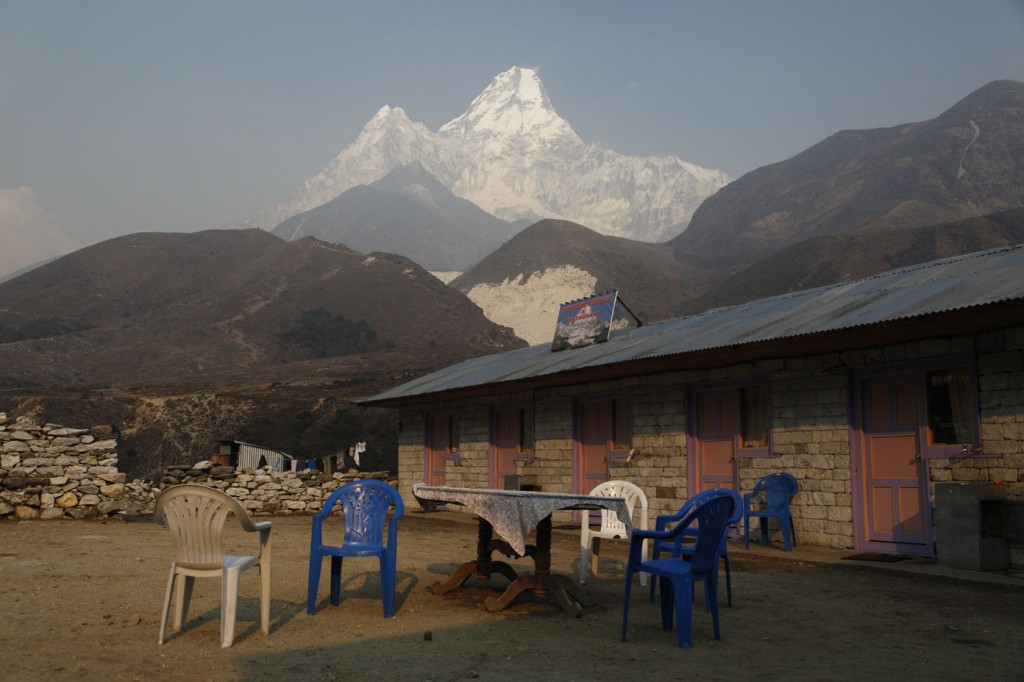
Mountains Around Namche

It is now February 2011; people that are going to attempt Everest this year are in their final weeks of preparation. I personally know three people that are heading there this year, and I’ve exchanged emails with another few. It’s an exciting time for them, and I know what it’s like to be nearing such a big adventurous expedition. In fact, I find myself being a little envious of the big journey they are about to embark on; I find myself thinking that I would also like to be a part of an experience like that again.

This makes me remember a little conversation I had at the Calgary Airport with Calgarian and Everest Summiteer Andrew Brash. It was the day I was leaving for my Everest trip, we were on the same flight to Vancouver. When I told him I was heading to Kathmandu to start my Everest journey, he said how nice it would be to go and do the same, head back to Everest and go climb there. I thought little of it at the time, but later on as I hated my life in Everest Basecamp, I wrote a blog post where I wondered about people like that:

We all discuss and wonder about those people that climb this mountain more than once, or those that hear about us going and say “Oh wow, I’m envious, you’ll have such a good time, I wish I was back on Everest!” Maybe it’s the fact that after a period of time all the hardships selectively leave our memory, and only the good memories remain. Well let me go on record while I still go through all the bad things and say those people can go knock themselves out and have this mountain when we’re done with it. There’s not much fun to be had in climbing Everest.

(link to full entry)

Well, isn’t it funny, what goes around comes around. I am now one of those crazy people that, knowing how much pain and suffering is involved in climbing Everest, I find myself missing it (or certain parts of it).

For those interested in following along with the latest Everest climbers, here are some links:

http://www.everestnews.com/ News items are posted along the right side of the main white column. Everest and associated climbing news.

http://www.weclimbforkids.com/ Two fellow climbers I met on Cho Oyu that have established their own charity to raise money for Greg Motenson’s Central Asia Institute with their Everest climb. Best of Luck Patch and Eric!

http://sethwolpin.blogspot.com/ Seth Wolpin from Seatlle, Washington area.

http://www.borgerpeakandpond.com/ Bill Borger from Calgary, who swam the English Channel in 2000, is attempting to climb Everest while raising money for Calgary Handibus.

http://gavinvickers.com/ Gavin Vickers, fellow climber from Cho Oyu, is not actually planning to go up Everest (he’s already done that), but is leading an expedition up Lhotse, which shares the same route as Everest from Nepal up to Camp 4, where it splits off.

Suffering and Hope

Sunday, May 30th, 2010

For those who may not have been reading my blog too much, I often talk about how much suffering is involved in mountain climbing. What we have to put our minds and bodies through in high altitude mountaineering is not easy; you can’t quite train away the suffering that will have to be endured while acclimatizing on the mountain. It is the main reason I did this climb for charity, it was my way of putting myself into the suffering of those most needy in the world. On that note, there is a quote I heard just today that might put that suffering into a bit of perspective, for why people do it:

“We also rejoice in our sufferings, because we know that suffering produces perseverance; perseverance, character; and character, hope. And hope does not disappoint us.”

Maybe if you’re ever going through some tough times yourself (climbing your own internal Everest) keep the above in mind.

Below, a couple more pictures from the summit, holding flags of the Knights of Columbus. My fellow Knights supported me on this climb both in moral support and donations, so much thanks to them all!

KofC Summit

KofC Summit

Snow Blindness and Sun Burn

Tuesday, May 25th, 2010

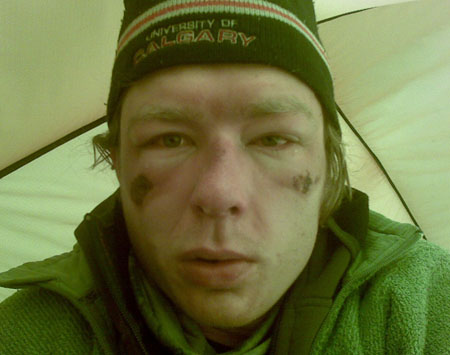
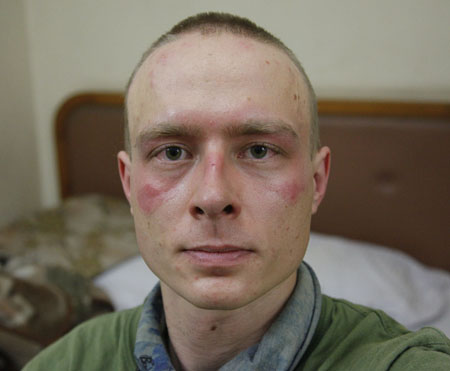
I do not feel like writing too much right now, so I will post another couple of pictures that might tell their own story. While going from Camp 3 to Camp 4 I got sunburned on my cheeks under the sides of my eyes. That is what caused the scabs on my face. Also, while coming down from the summit I got mild snow blindness, which lead to my eyes and upper face being swollen. All together it looked like I got into a fight with the ugly stick and lost badly.

Snow Blindness and Sunburn

Making little mistakes on Everest like I did does have consequences. It’s an unforgiving mountain. Now things are better, I am in Kathmandu, once again back in civilization, enjoying it tremendously. My face seems to be healing well; while I still had scabs on my face it was a definite conversation starter. I got myself a haircut, now all I need is a real job.

Face Healing Well

Take care everyone and see you soon!

Dehydrated foods taste bad

Monday, March 22nd, 2010

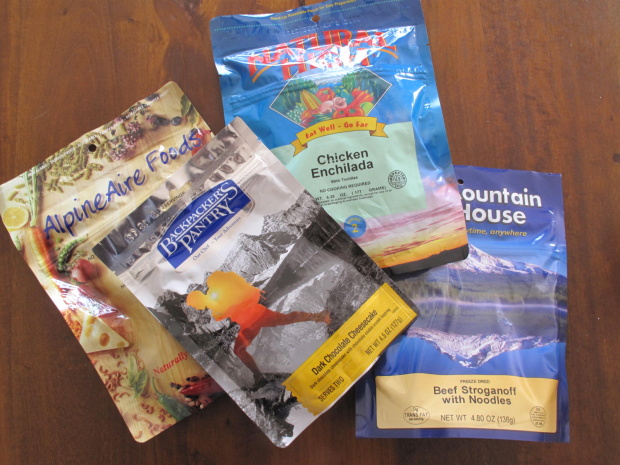
In preparing for my Everest climb, one of the few things I still need to arrange is to have some food to take with me. While most of the food along the expedition is included, once we get to the high camps we have to rely on food we brought and carried up ourselves. Now, the problem with normal food is that a few days worth of it in your backpack can easily be a lot of weight. So one approach is to buy food that is dehydrated, which weighs very little, and you just add boiling water to a package and the contents are ready. Nice solution! The problem with that is it all tastes like crap!

But then again, everything tastes like crap when you’re at altitude. And I have only ever tried dehydrated meals at altitude. In fact, I thought they taste so bad that on my last trip in the Himalayas I could not even make myself open a package and try it. Mentally I was just so disgusted with the prepared dehydrated meal that would be the result that I was getting sick just thinking of it. So I just left them and snacked on other things instead.

In hoping to eliminate this mental block I thought I would prepare some dehydrated meals here at home, where they would come out better, and give them a try. The guy in the mountain store said this should be done, you should try eating them at home to see what you like and what you don’t. And it makes sense, because here you can boil water at 100 degrees (or close to is), whereas in the high camps on Everest you’re lucky if your water boils to 70 degrees. So the meals can be prepared better here.

Anyways, I just tried that with this one meal, and I had to throw half of it out. It was horrible. And while it sucks, I know I’m not alone. I’ve met at least one other accomplished climber who never touches dehy meals. It takes a bit more creativity and planning and thought to put stuff together, but it’s possible. I’m still working out what the best things are, it’s one of the things that I am finding is hardest to learn from one expedition to the next. I may not get it right for this trip but I’ll be closer than last trip. Wish me luck!

Dehydrated Meals

North vs. South

Friday, March 12th, 2010

I will be attempting to climb Mt. Everest via the southern col route, or southeast ridge route, which is in the country of Nepal. The other main route is the northeast col route, via the northeast ridge, which lies in Tibet (or China). You’ll generally hear people talk about them as either the North route and Chinese side, or South route and Nepali side. There are of course other ways up the mountain, you can go up whichever way you like, but if you’re not going up either of these two routes it’s because you want more of a challenge.

Everest Routes as seen from space

The first step in climbing Everest is deciding you want to go. The second step is deciding which route you want to take. I just thought I would go over some of the pros and cons of each side, and why I chose the side I did. Know that this is based on what I have heard and read (and I have asked a lot of questions about this of our leader Arnold, who has climbed on both sides), but obviously I haven’t yet been on either route.

Getting to the base camp on the North side means driving in. A while back when the Chinese were trying to put some of their own people to the top they made a road that goes all the way into base camp, and then paved it to put the Olympic torch onto the summit. Getting to base camp on the south means hiking in through the Khumbu Valley, which is supposed to be a very beautiful hike in, and worth the trip by itself just to hike into base camp. This takes about 10 days because of the need to stop and take rest days to acclimatize to the altitude. The Nepalis have made a national park of this area so roads are not going to be constructed anytime soon.

The North side is generally considered colder, as it sees less sun, whereas the South side can get decently warm when the sun is out. It’s a major consideration for some, especially those more susceptible to getting cold in their extremities.

The route itself is considered easier on the North side up to camp 4, where you sleep before summit day, but above camp 4 there are three technical sections (known by their imaginative names as the First, Second, and Third Steps) that catch a lot of people unprepared. This then creates the opportunity for people with limited technical competence to get quite high, then have trouble on the toughest sections, on the toughest day, and create traffic jams for everyone else. On the South the route apparently gets a bit more involved early on, and while it also has it’s technical section on summit day called the Hillary Step that can cause traffic jams, if you’ve gotten there already you have a decent chance of making it over without causing too many problems for others.

Then there’s the location of Camp 4, the highest camp before the summit. On the North side it’s at 8300m, which is the highest camp on earth! This means you have to spend a night at this altitude before trying for the summit. On the south side the camp is a little lower at 8000m, where you still need to sleep on oxygen, but it’s that much lower. However, that also means that you have 850m to climb to the summit from the South, and only 550m from the North; therefore summit day takes significantly longer from the South, but as stated above it is technically not as involved.

Another consideration is the famed Khumbu Ice Fall on the South, where you have to cross large bottomless crevasses via ladders strapped together end to end. It is the most dangerous part of the ascent via either side, and it’s for this reason alone that some people choose to climb from the North. The problem is that the ice fall is continuously moving, and while navigating through it there are chances that pieces will break off, onto people or break ladders that people are on. To me it’s the kind of risk you can do almost nothing about (other than avoid it by going the North route), as it becomes a lottery for who might or might not be affected.

Khumbu Icefall, Photograph by Olaf Rieck

One last difference is price. The Northern route is generally cheaper. This is because of logistics and getting people and supplies to base camp is done all by car. On the South, people and supplies are first flown from Kathmandu to Lukla, then people hike and supplies are taken by Yak to base camp. All this takes time and money. There might be a slight difference in permit price too, but I am not exactly sure.

So why did I choose the South side? Several reasons. I have heard such good things about the hike to base camp through the Khumbu Valley that I wanted to experience that myself. Getting to base camp from the North involves a drive that I have already done, as it’s almost the exact same approach as getting to Cho Oyu base camp. Another reason is that I would like if the people that are climbing around me on summit day have earned their place, and are not going to be caught off guard by the technical sections and cause traffic jams.

But the main reason is a difference that I only slightly touched on above, and that’s the attitude of the countries in which these two approaches lie. China made a road. Nepal made a national park. China has been known to limit access across the border when things in Tibet start heating up. If I can help it I will put my money into the country that is doing things the way I support, and not politically oppressing the region I am climbing in. But that’s a whole other story that I won’t get into.

So, what side would you choose? :-)

What are the odds I’ll die on Everest?

Thursday, March 11th, 2010

I thought I would answer a question that might be on some people’s minds. I have been asked this question several times, and while mostly people say it jokingly, not expecting a real answer, I realize that it is a legitimate question. And I realize they do mean it, as “a lot of truth is said in jest”. Believe it or not, such a question does not bother me; I realize that what I’m going to do is potentially dangerous, and I have accepted whatever that risk may be. But I also know that it’s not that great of a risk.

The easiest way to answer that question is to check Wikipedia’s article “Eight-thousander”, which lists all 14 of the world’s peaks above 8000m, and gives some stats on them. Taking a quick look at Everest shows that since 1990, the death rate has been 4.4%. So, that means there’s more than 95% chance that I’ll be coming back, right? :) That’s pretty good odds!

But actually it’s not quite that easy. Those numbers are out of date (Everest now has over 4500 summits by over 2800 different people), plus, for lack of data, they take the death rate as Deaths/Successful Summit, rather than Deaths/Attempt. Luckily, there is a database out there that is more up to date and more complete, it’s called the Himalayan Database, and it’s the archives of Elizabeth Hawley, a journalist that traveled to Kathmandu in 1960 and decided to stay there for good!

Himalayan Database

Anyways, depending on what time range you pick, the values of course differ, but if you take the last 20 years like Wikipedia does (1990-2009), or the last ten years (2000 – 2009), the death rate on Everest per person that showed up to climb above base camp is in the 1.5% range. For example, in 2009 there were 5 fatalities, a German, a Czech, a Chinese man, and two Nepali Sherpas. And there was almost 400 people with permits to climb above base camp.

I would like to think those odds are reasonable. I don’t have any stats for what is the likelihood someone will die in a car accident, or from a certain disease, so it’s hard to compare. But I definitely don’t feel that my life is at stake with every step I take. At the same time, on Everest there are no guarantees. A bad year with weather might mean more people don’t come home; good weather might mean more make the summit. Although the odds are in everyone’s favor, someone has to make up that 1.5%. Is that acceptable? That becomes a personal decision for everyone… And what about other effects, such as losing digits due to frostbite?

Anyways, that’s all I’ll dwell on this topic. It’s not something I focus on, but it is something I am aware of, and I think most people would be surprised at how good those odds are. Obviously the most newsworthy trips up Everest are the ones where someone doesn’t come home, so that’s what people tend to hear and that’s what they tend to associate with the mountain.

Go read Into Thin Air

Friday, February 12th, 2010

Into Thin AirFor the last little while I have been reading the book “Into Thin Air” by Jon Krakauer, and I suggest you have a read of it. If you want to read about a real-life adventure, or if you want to learn more about climbing in general and high altitude in particular, or some of the history of Mt. Everest, you will find it all there. It’s a good book for everyone, as it assumes you know very little about the world of mountains and climbing them. Many people I have spoken with that have very little interest in mountains and climbing really enjoyed the book; it gives a very good description of what it’s like to climb in these high mountains, things I explain to people when I show them my photos and share my experiences. So if you have a read of this book you will know at least some of what I’m going through when I am on my trip this spring.

I thought it was a very good book, well written and a well told story. It’s not quite as epic as “Touching the Void” by Joe Simpson (read that one after if you want, it’s one of my favourite books ever), but good nonetheless. However, read “Into Thin Air” with a grain of salt, as there is some controversy over some of the things in that book, mainly the author’s guesses at people’s motivations for their actions. An entire book was written to tell the tale of that disaster from another point of view and question some of what Jon wrote, so just keep that in mind.

Let me know if you want to borrow my copy of the book. I will share some quotes to get you interested:

But at times I wondered if I had not come a long way only to find that what I really sought was something I had left behind.
- Quote taken from Hornbein, “Everest, The West Ridge”

Everest has always been a magnet for kooks, publicity seekers, hopeless romantics, and others with a shaky hold on reality.

The fact that a climber has paid a large sum of money to join a guided expedition does not, by itself, mean that he or she is unfit to be on the mountain.

People who don’t climb mountains – the great majority of humankind, that is to say – tend to assume that the sport is a reckless, Dionysian pursuit of ever escalating thrills. … At least in the case of Everest … the ratio of misery to pleasure was greater by an order of magnitude than any other mountain I’d been on; I quickly came to understand that climbing Everest was primarily about enduring pain. And in subjecting ourselves to week after week of toil, tedium, and suffering, it struck me that most of us were probably seeking, above all else, something like a state of grace.

“If client cannot climb Everest without big help from guide,” Boukreev told me, “this client should not be on Everest. Otherwise there can be big problems up high.”

Mountaineering tends to draw men and women not easily deflected from their goals. By this late stage in the expedition we had all been subjected to levels of misery and peril that would have sent more balanced individuals packing for home long ago. To get this far one had to have an uncommonly obdurate personality.
Unfortunately, the sort of individual who is programmed to ignore personal distress and keep pushing for the top is frequently programmed to disregards signs of grave and imminent danger as well.

Bottled oxygen does not make the top of Everest feel like sea level. … 29,000 feet with gas felt like approximately 26,000 feet without gas.

Not only during the ascent but also during the descent my willpower is dulled. The longer I climb the less important the goal seems to me, the more indifferent I become to myself. My attention has diminished, my memory is weakened. My mental fatigue is now greater than the bodily. It is so pleasant to sit doing nothing – and therefore so dangerous. Death through exhaustion is – like death through freezing – a pleasant one.
- Quote taken from Reinhold Messner, “The Crystal Horizon”